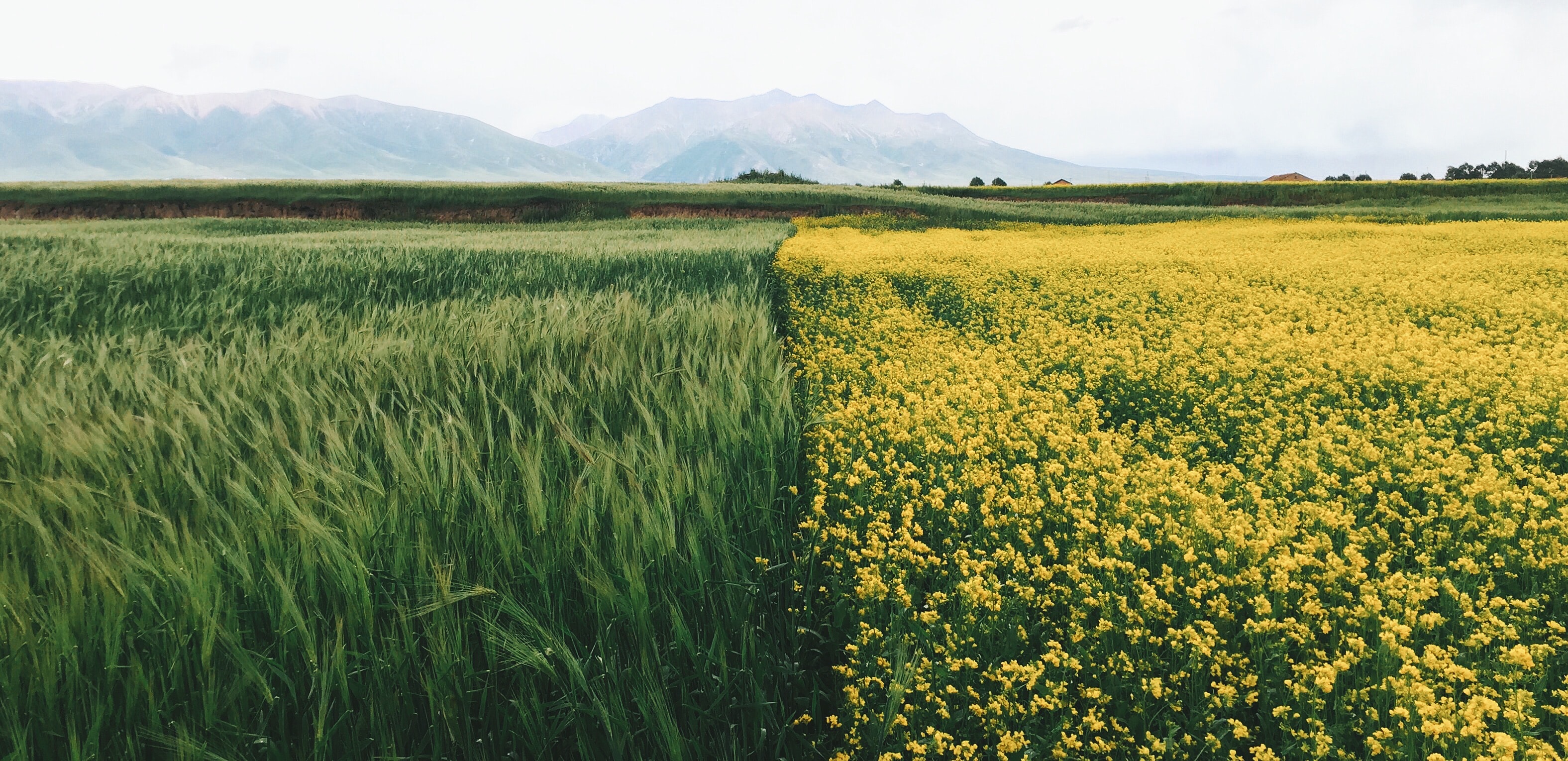
The yellow flowering plant on the right above is canola. We can't grow it around Whitehorse.
Or can we? How do farmers decide? If we can't grow it now, might climate change enable us to
grow it someday soon? It all depends on the accumulation of heat by the plant. And
accumulations are measured by integrals, our last calculus topic.
Integrals measure areas,
and are calculated using antiderivatives
The heading above says it all. That's it. That's the week. 😅
If we have a function that represents a physical quantity (weight, rainfall, electric
current) over time then the area beneath that function measures the total accumulation of the quantity
over time. We call that amount the integral.
It turns out that the integral over an interval is the
difference between the values of the function's antiderivative evaluated at the endpoints. So
the new skill this week is antidifferentiation. That is such a mouthful that we usually say
integration instead.
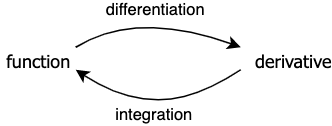
Beware! The main point of confusion in this week's material is that while we have
spent the last two weeks taking derivatives (and you are still taking them on as you work on the assignment from last week) this week we need to switch direction and ‘untake’ them,
that is to go backwards from a derivative to the function it came from. Not getting the two
directions confused can be a challenge.
Advice: Before you begin an assignment or exercise
Pro tip
for doing exercise and assignment problems: Begin by preparing a one-page summary of the
week's material and keep it at your side.
Preparing the page is
an excellent way of warming up to do the problems, and then you'll have all the formulas and diagrams you need handy. Even better, when the time comes to
create your cheat sheet for the final exam you can just make it up from your weekly
formula pages. Some weeks I have provided a formula sheet that you can use as a starting
point (by printing it out and annotating it), but when I haven't I strongly encourage you to create
one of your own. Cheatsheets rule! 😎
Peeking ahead 🔮
This week will complete our tour of calculus topics. Next week we'll move on to something
completely different: probability. It's an area of discrete (as opposed to continuous)
mathematics. After probability we'll look at graph theory, which is about using arrow
diagrams to model connectivity (nothing to do with graphs of functions). Because our
final two topics are so different from what we have been doing, they give you a fresh start
for the second half of the course (and time to sort out any earlier topics that have been giving you trouble before the final exam 💪).
That's all for now,
Stay well,
Tim
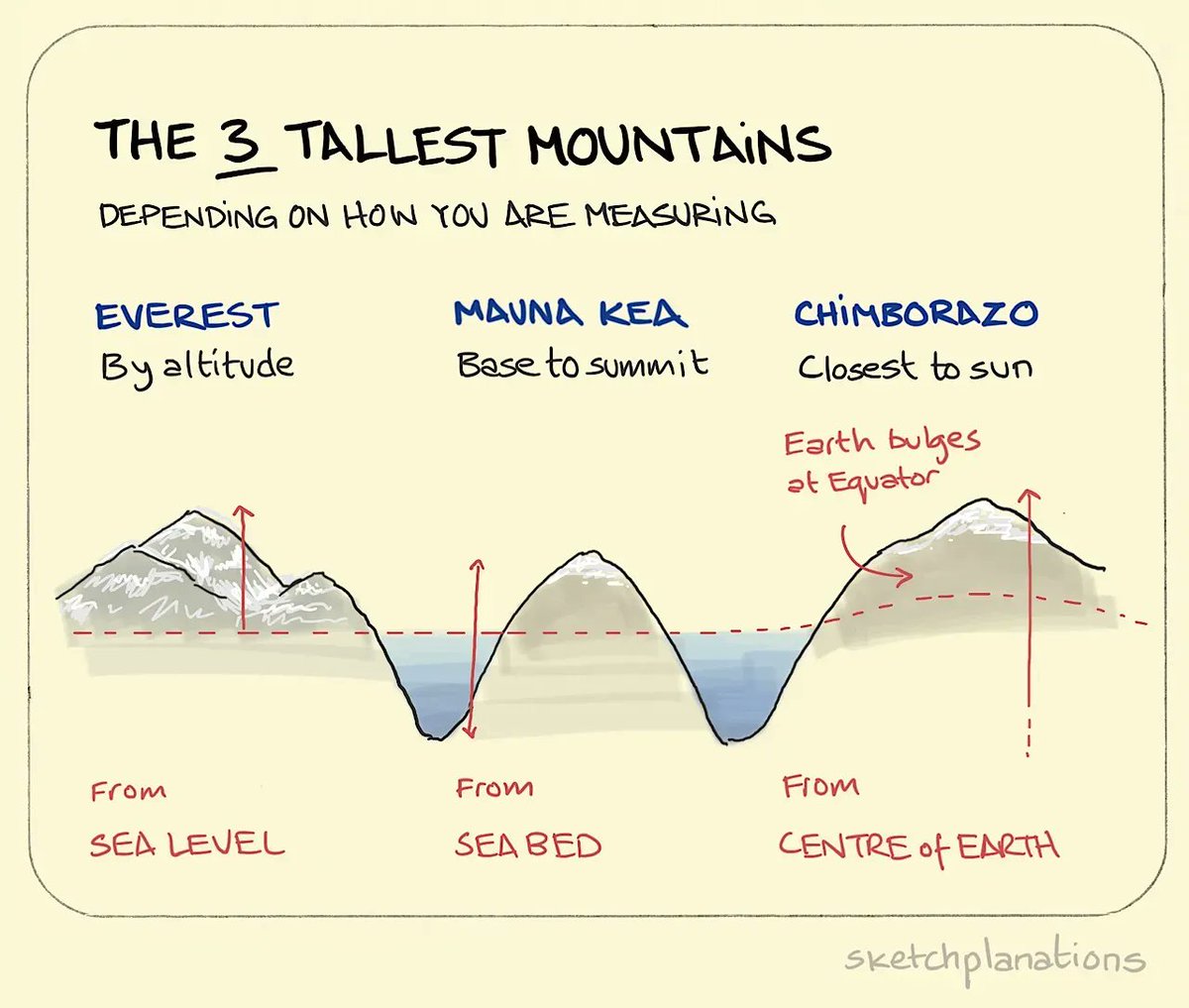
Measurements are supposed to be objective, but even measurement has subtleties, e.g. if we do not agree on exactly what we are measuring!